Oklahoma Storm Shelter Pros
Storm and Tornado Shelter Installation in Oklahoma. Licensed Local Installers. SoonerSafe Rebate Eligible.
Searching storm shelters near you? An Oklahoma storm shelter company can be a manufacturer, a dealer, an installer, or all three. Above-ground safe rooms, underground storm cellars, and garage in-floor units are installed across OKC, Tulsa, and the rest of Oklahoma. Who you hire matters for the state rebate too: SoonerSafe requires a Certificate of Installation signed by your installer. Free quote, no obligation.
Free Quote
Get a Free Quote from an Oklahoma Storm Shelter Company
Four quick fields. Your written quote comes back free and with no obligation. If the SoonerSafe rebate applies to you, the installer who prices the job walks you through it.
The Oklahoma Words for It
Storm Shelter, Storm Cellar, Tornado Shelter: One Thing, Three Names
They are the same thing, and the state adds a fourth name. Storm shelter, storm cellar and tornado shelter all describe a hardened room built to survive a tornado, and Oklahoma's rebate program files every one of them under safe room. The program defines that term by the standards the unit meets rather than by what a seller calls it: "the term safe room will include any above or below ground shelter in which the design, construction, and installation comply with the most recent versions of FEMA Publications 320 (Taking Shelter from the Storm) and FEMA 361 (Design and Construction Criteria for Community Safe Rooms), as well as ICC 500".
So a tornado shelter, a storm shelter and a storm cellar are three names for one purchase. What actually changes the price and the paperwork is whether the unit sits above ground or below it, where it goes on your property, and whether the installer will sign the state's certificate.
The naming matters once you go looking for help paying for one. Homeowners search for a storm cellar, but the money is filed under safe room: the program is the SoonerSafe Safe Room Rebate Program, and a claim needs a Certificate of Installation signed by the installer attesting the unit meets those three standards. An older poured cellar counts only if it was built and documented that way. What should decide your choice is the site rather than the word: yard space, garage layout, water table, and how fast everyone in the house can reach it.
Below-ground cellars are built today as underground storm shelters in precast concrete or welded steel, and the poured-in-place option is covered on the concrete storm shelter page. If you want the rebate, start with the SoonerSafe rebate guide.
Definition and rebate rules from the Oklahoma Department of Emergency Management SoonerSafe rules and regulations, read in full on August 7, 2026. The quoted definition of a safe room is question 2 of the SoonerSafe frequently asked questions, read in full on August 22, 2026.
Public Shelters
Is There a Public Tornado Shelter Near Me in Oklahoma?
Ask your own city's emergency management office, and do not build your tornado plan around reaching one. The City of Moore publishes that it has none at all: “The City of Moore has no community (or “public”) tornado shelters.” Whether the town next to you is different is a question for that town, not an assumption to make in a warning.
Why Moore says it does not run one
The city gives two reasons on that page. First, “Overall, people face less risk by taking shelter in a reasonably-well constructed residence!” Second, “There is no public building in Moore which has a suitable location for a shelter.” The page then walks through what driving to a community shelter actually involves: hearing the warning, deciding to go, gathering family and keys, locking the house, getting in the car, and possibly meeting the traffic of everyone else doing the same. Its conclusion is that in that scenario there is a far greater likelihood of getting caught in your car when the tornado strikes.
The clock is the whole argument
The same page states that “The average tornado warning time is generally only 10-15 minutes.” That is the window a homeowner is actually planning against, and it is why the city's own recommendation is a shelter at the house: “We at the City of Moore Emergency Management Department advocate that every residence have a storm safe-room or an underground cellar.” A shelter inside the house is a different plan from a shelter you have to drive to.
What to do with that if you have no shelter yet
Two separate jobs. Tonight, know the interior room you would use and check that nothing heavy sits on shelves above it. For the longer fix, a house on a slab with no basement has no below-grade room to fall back on, which is why an above ground storm shelter in a garage corner and a garage storm shelter set into the floor are two of the options Oklahoma homeowners weigh, and why the state runs the Oklahoma storm shelter rebate. Once a unit is in, registering the shelter with local fire and EMS is the last step. The Tulsa Planning Office puts the reason plainly: it is “a good idea to register your storm shelter with the City of Tulsa to help first responders locate your shelter when responding to a severe storm.”
Quotations from the City of Moore Emergency Management Department, Storm Shelters, read in full on August 22, 2026. Moore's statements describe Moore. Other Oklahoma cities set their own policy, so check with yours.
Finding an Installer
Storm Shelters Near Me and Tornado Shelters Near Me in Oklahoma
Searching for storm shelters near you means you want a company that will come to your address, and in Oklahoma the installer you pick decides more than the price. The state rebate is paid only to selected homeowners who send in a paid invoice and a Certificate of Installation signed by the safe room installer, and the rules say plainly that you may not build or install the safe room yourself. So the first question to ask any installer is whether they will sign that certificate.
Tornado shelters near me and storm shelters near me are the same search
All three words get used here for one purchase, and nothing in the state rebate turns on which one you use: SoonerSafe defines a safe room by the FEMA and ICC standards the unit meets, not by its name. So a tornado shelter near you, a storm shelter near you and a storm cellar near you are the same search. Sort the companies by what actually differs instead: above ground or below ground, where the unit can sit on your lot, and whether the company will sign the state's certificate.
Ask whether the installer will sign the certificate
Selected recipients have to submit their paid invoice together with a completed SoonerSafe Certificate of Installation attesting that the safe room's design, construction, and installation comply with the most recent versions of FEMA Publication 320, FEMA 361, and ICC 500. The Oklahoma Department of Emergency Management requires that certificate to be signed by the safe room installer and filed by the deadline for that selection period. An installer who will not sign it leaves you without a document the state requires, so ask first. The Oklahoma storm shelter grants and rebates hub walks through the paperwork step by step.
You cannot install it yourself, and you cannot install it early
Two rules trip up homeowners who move fast. The program states that you may not build or install the safe room yourself, so a do-it-yourself build is out. And a safe room already installed, being installed, or planned for installation at any time before you are notified that you have been selected is not eligible, which means buying now and applying later does not work. Retrofitting or repairing an existing shelter to meet FEMA specifications does not qualify either, though a new safe room still can.
Where the shelter is allowed to go on your property
The program allows a safe room in a new or existing home as an interior room on the first floor, underground on the first floor, or as a detached above-ground or underground unit within 100 feet of the home, and it says the shelter should be readily accessible to all occupants. The same rules note that many local building codes require a permit and an inspection by local building inspectors, so confirm both with your city or county before work starts. Placement is usually what settles the shelter type: an above ground storm shelter for a garage corner or a slab, a garage storm shelter set into the floor, or a poured cellar in the yard.
Who is not eligible for the state rebate
The rebate is for single-family homeowners at their primary residence, on property the applicant owns. Apartment complexes, duplexes, and other multi-family residences are excluded as businesses, and community or neighborhood safe rooms are excluded too. If you rent the house you live in you are not eligible. If you live in a mobile home you must own both the home and the land it sits on. If you own two or more homes, only your primary residence counts. A home in a floodplain with flood insurance may still qualify for an above-ground unit but not a below-ground one, with other agencies reviewing the specific case. Local city or county rebate programs run on their own separate guidelines, and the state tells homeowners to contact those programs directly. A rebate on a safe room installation is a partial reimbursement after the work is finished and paid for, never money up front.
Where to shelter until you have one
The National Weather Service's guidance for a tornado warning is short. At home, go to your basement, safe room, or an interior room away from windows. Outdoors, get inside a sturdy building immediately, because sheds, storage buildings, mobile homes, and tents are not safe. In a vehicle, drive to the closest shelter if you can; if you cannot, get down in the car and cover your head, or leave the car for a low-lying area such as a ditch. The service's own summary of tornado safety is that acting quickly is what keeps you safe, which is the argument for a shelter you can reach from inside the house rather than one you have to drive to.
Sources, all read in full on August 18, 2026: Oklahoma Department of Emergency Management, SoonerSafe rules and regulations and the SoonerSafe program page; National Weather Service, What to do During a Tornado. Reviewed August 18, 2026.
Comparing Companies
Oklahoma Storm Shelter Companies: How to Compare Installers and Dealers
There is no state storm shelter contractor license in Oklahoma to check a company against. The Construction Industries Board states that "General Contractors are not currently required to have a state license in Oklahoma for general contracting," and storm shelter installation is not among the trades the board lists as licensed. So the things you can actually check are documents: the unit's FEMA P-320 and ICC 500 test paperwork, current insurance certificates, the local building permit, and whether the company will sign the state's Certificate of Installation.
There is no state license for storm shelter installation
The Oklahoma Construction Industries Board lists building inspectors, electrical, home inspectors, mechanical, plumbing, and roofing among the trades it licenses. Storm shelter installation is not among them, and the board's own page states that "General Contractors are not currently required to have a state license in Oklahoma for general contracting." That matters in two directions. A storm shelter company without a state contractor license is not skipping a state requirement, because the board says the state does not impose one for general contracting, though your city or county may have its own registration rules and the building department is the place to ask. And a company describing itself as state licensed for shelter work is naming something the board's page does not show the state issuing, so ask which license, from which board, and for what trade. If your install includes electrical work for a light or a vent fan, electrical is one of the trades the board does license, so ask for the license number covering that part of the job.
Manufacturer, dealer, and installer are often three different companies
The word on the truck is not always the word on the warranty. A manufacturer builds the unit and holds its test documentation. A dealer sells that unit in your area. An installer digs, sets, and anchors it. One business can be all three. Ask which of the three you are talking to, then ask who holds the warranty on the shelter and who holds the warranty on the installation, and get both in writing. The National Storm Shelter Association keeps its own directory and invites homeowners to "Browse our NSSA Producer and Professional listings to find the right Tornado Shelter for your individual needs." Read a listing for what it says it is: the association's Accredited Professional credential names five specialty tracks, architecture, structural engineering, mechanical engineering, electrical engineering, and civil engineering, which are design and engineering disciplines. Comparing the unit itself first is often easier than comparing the companies, and the storm shelter types pages set out what each build is for.
What to ask a storm shelter company before you sign
Four questions separate companies on paper rather than on sales talk. First, will you sign the SoonerSafe Certificate of Installation? The state requires that "the certificate must be signed by the safe room installer and submitted to OEM by the deadline associated with your rebate selection period," so a company that will not sign leaves you without a document the rebate needs. Second, can I see the FEMA P-320 and ICC 500 documentation for this exact model? The certificate attests that the safe room complies with "the most recent versions of FEMA Publications 320 (Taking Shelter from the Storm) and FEMA 361 (Design and Construction Criteria for Community Safe Rooms), as well as ICC 500 (Standards for the Design and Construction of Storm Shelters)." Third, who pulls the permit? The state notes that "many local building codes require a permit and inspection by local building inspectors," so the office to call is your city or county building department. Fourth, what does the written quote include: excavation, concrete, anchoring, haul-off, and the door hardware, or only the box? Our SoonerSafe installer requirements page carries the same checklist in the order you will use it.
What storm shelter companies charge, and who pays for it
Quotes are easier to compare when they are for the same shelter type, so ask each company to price the same build rather than its own preferred one. Metro pricing and the local permit office differ across the state, and the Oklahoma City storm shelters and Tulsa storm shelters pages cover each metro. The Oklahoma storm shelter cost guide sets out the ranges and what moves them. On the funding question, the state rebate is a partial reimbursement after the work is finished and paid for rather than money up front, and the program states that "you may not build or install the safe room yourself." One line in the rules decides whether an existing shelter can be brought up to standard on the state's money: "Retrofitting or repairing an existing storm shelter to meet FEMA specifications does not qualify. However, you may be eligible for a new safe room." We do not publish a figure for how much a shelter adds to a home's resale value, because none of the sources read for this page publishes one.
Sources, all read in full on August 21, 2026: Oklahoma Construction Industries Board; Oklahoma Department of Emergency Management, SoonerSafe rules and regulations; National Storm Shelter Association, home page and NSSA Accredited Professional. Reviewed August 21, 2026.
Oklahoma Rebate
The SoonerSafe Rebate May Cover Part of Your Storm Shelter Cost
The SoonerSafe Safe Room Rebate Program is a statewide program run by the Oklahoma Department of Emergency Management. Selected homeowners may be reimbursed for part of what they paid, after the shelter is installed. Funding is limited each year and selection is by random drawing, so it pays to check your eligibility early.
Rebate amounts, eligibility rules, and registration dates are set by the Oklahoma Department of Emergency Management and change from year to year. The figures on this page were read at the agency's own pages on September 16, 2026. Check the program's own page for what is current before you plan around any of it. See soonersafe.ok.gov.
Storm Shelter and Storm Cellar Options for Oklahoma Homes
Storm Shelter Options- 01 Learn More
Above-Ground Storm Shelters
Steel or concrete units installed at grade, no excavation required.
- 02 Learn More
Underground Storm Shelters
In-ground concrete or steel units set in the yard or driveway.
- 03 Learn More
Garage Storm Shelters
Below-floor units installed inside the garage, accessed by a lid.
- 04 Learn More
Concrete Storm Shelters
Poured or precast concrete shelter construction.
- 05 Learn More
Steel Storm Shelters
Heavy-gauge steel shelter fabrication and installation.
- 06 Learn More
Tornado Safe Rooms
In-home reinforced safe rooms as an alternative to detached shelters.
- 07 Learn More
FEMA P-320 Compliant Shelters
Shelters meeting federal residential safe room standards.
- 08 Learn More
ICC-500 Compliant Shelters
Shelters meeting International Code Council standards.
Why Oklahoma Homes Need Storm Shelters
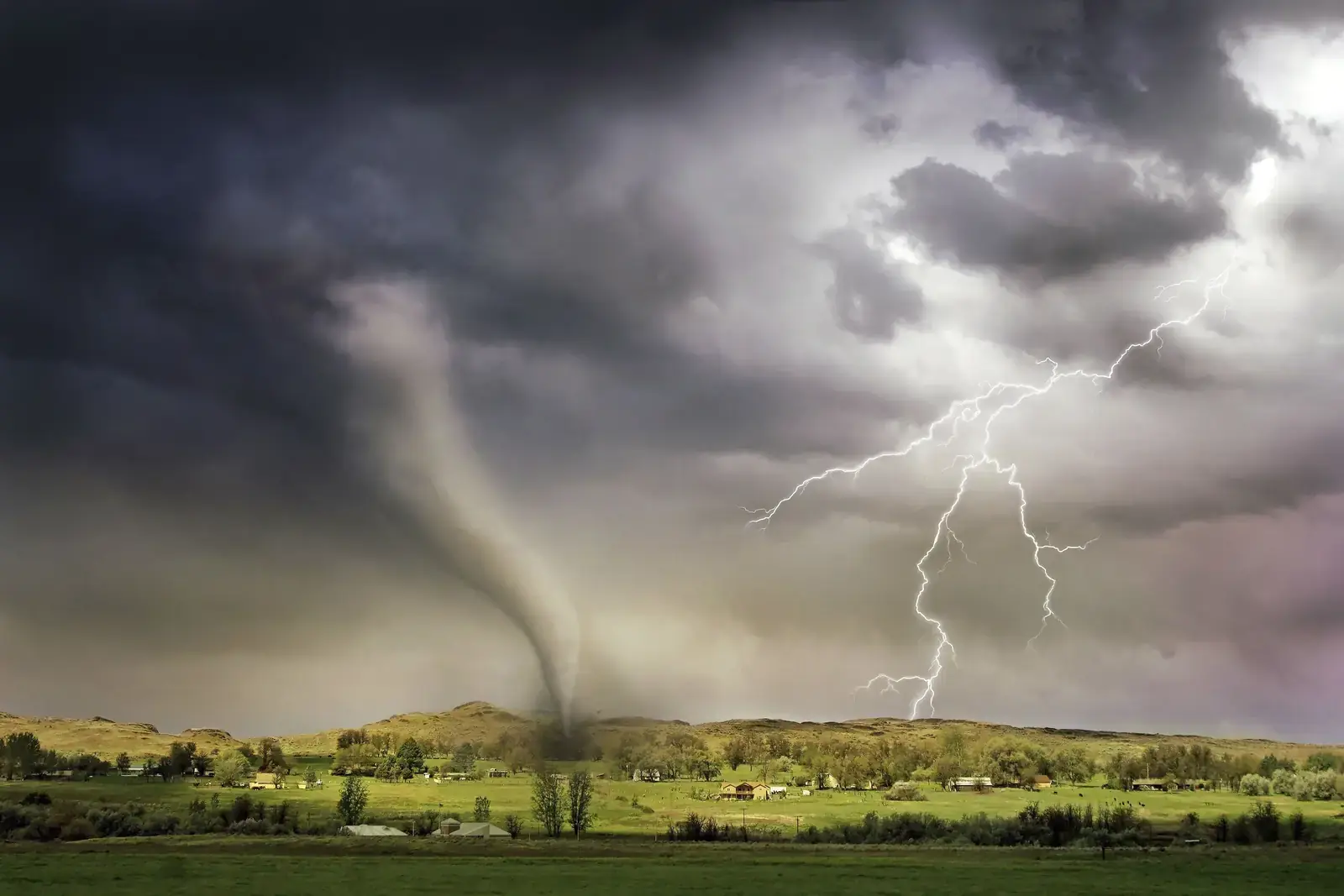
Oklahoma sits in the heart of tornado alley and averages more than 60 tornadoes a year, with EF3 or stronger events documented nearly every season. Few places on earth see this much violent weather, and the central part of the state from Oklahoma City through Moore and Norman is among the most active corridors anywhere.
The May 20, 2013 Moore tornado was an EF5 that killed 24 people and leveled entire neighborhoods, much as the May 3, 1999 outbreak had done 14 years earlier. Storms like these are why so many Oklahoma families treat a shelter as standard equipment rather than a luxury.
Oklahoma has a siren network and a National Weather Service forecast office in Norman, and the warning still arrives close to the storm. The City of Moore's emergency management department puts it at 10 to 15 minutes on average. That is not much time, and an interior bathroom or closet offers little real protection once winds reach EF3 and above. A shelter built to FEMA P-320 or ICC-500 standards is the difference that actually holds up.
Getting a Storm Shelter Quote in Oklahoma
Simple Process- 01
Tell us about your home
Share your city, whether you want a garage, yard, or in-home shelter, and how many people you need to protect.
- 02
A licensed installer picks it up
An installer in your area who handles the shelter type you are considering takes it from there.
- 03
Free quote in writing
The installer provides a free consultation, a written quote, and schedules your installation. No obligation.
Statewide Coverage
Storm Shelter Companies and Installers Across Oklahoma
- Oklahoma City
- Tulsa
- Edmond
- Norman
- Moore
- Yukon
- Mustang
- Broken Arrow
- Owasso
- Bixby
- Jenks
- Sand Springs
- Stillwater
- Bartlesville
- Enid
- Shawnee
- Lawton
Don't see your city? Call (405) 451-9960 , we work with installers statewide.
2026 Pricing
What a Storm Shelter or Storm Cellar Costs in Oklahoma (2026)
| Shelter Type | Typical Installed Price |
|---|---|
| Above-ground steel | $3,000 to $5,500 |
| Underground concrete | $5,500 to $8,000 |
| Garage in-floor | $4,000 to $7,500 |
| Custom safe room | $6,500 to $12,000+ |
Typical installed prices, which is what you pay the installer.
Common Questions
Storm Shelter Questions Oklahoma Homeowners Ask
Do storm shelter companies in Oklahoma need a state license?
Not for the shelter work itself. The Oklahoma Construction Industries Board lists building inspectors, electrical, home inspectors, mechanical, plumbing, and roofing among the trades it licenses, and its own page states that general contractors are not currently required to have a state license in Oklahoma for general contracting. So a company without a state contractor license is not skipping a state requirement, though your city or county may have its own registration rules and the building department is the place to ask. Ask which license, from which board, and for what trade. Electrical is one of the trades the board does license, so ask for the license number covering any electrical part of the job.
What is the difference between a storm shelter dealer and an installer?
A manufacturer builds the unit and owns its FEMA P-320 and ICC 500 test documentation. A dealer sells that unit in your area. An installer digs, sets, and anchors it. One Oklahoma business is often all three, but not always, so ask who holds the warranty on the shelter and who holds the warranty on the installation, and get both answers in writing before you sign.
How do I compare storm shelter companies in Oklahoma?
Ask three companies to quote the same shelter type, so you are comparing the same build rather than each company's preferred one. Ask each company whether it will sign the SoonerSafe Certificate of Installation, whether it can show the FEMA P-320 and ICC 500 documentation for the exact model quoted, who pulls the local building permit, and what the written quote includes: excavation, concrete, anchoring, haul-off, and door hardware, or only the unit.
How much does a storm shelter cost in Oklahoma?
Most storm shelters in Oklahoma run between $3,000 and $12,000 installed. Above-ground steel units typically start around $3,000 to $5,500, underground concrete shelters run $5,500 to $8,000, and custom safe rooms can reach $12,000 or more. Separately, the SoonerSafe Safe Room Rebate Program may reimburse part of what you paid if you are selected, and soonersafe.ok.gov carries the current terms.
How do I find a storm shelter installer near me in Oklahoma?
Tell us your city and what you are considering, and a local installer who covers your area and that shelter type will call you. Before you sign anything, ask the installer two things: whether the unit is built and tested to FEMA P-320, FEMA 361, and ICC 500, and whether they will sign the SoonerSafe Certificate of Installation. The Oklahoma Department of Emergency Management requires that signed certificate from selected homeowners, so an installer who will not sign it costs you the rebate. Ask your city or county building department whether a permit and inspection are required as well.
Will FEMA pay for my storm shelter?
Not directly. Oklahoma funds the SoonerSafe Safe Room Rebate Program through FEMA Hazard Mitigation grants, but the program is run by the Oklahoma Department of Emergency Management and pays a partial reimbursement to homeowners it selects, up to $3,000 and not more than 75 percent of what the safe room actually cost. Selection is a random drawing among registered homeowners, some years with priority for disaster-declared counties, and you are reimbursed only after the shelter is installed and paid for in full. The 2026 program is not open. Registration and current terms are at soonersafe.ok.gov.
Can I install a storm shelter myself and still get the rebate?
No. The SoonerSafe rules state that you may not build or install the safe room yourself, and a claim needs a Certificate of Installation signed by the installer. Timing matters just as much: a safe room already installed, being installed, or planned for installation at any time before you are notified you have been selected is not eligible. Retrofitting or repairing an existing shelter to meet FEMA specifications does not qualify either, although a new safe room still can.
Where is the safest place to be during a tornado in Oklahoma?
The National Weather Service says to go to your basement, safe room, or an interior room away from windows if you are at home. If you are outdoors, get inside a sturdy building immediately, because sheds, storage buildings, mobile homes, and tents are not safe. If you are driving, get to the closest shelter if you can; if you cannot, get down in the car and cover your head, or leave the car for a low-lying area such as a ditch. A shelter built to FEMA P-320 or ICC-500 standards is what turns an interior room into real protection.
Does Oklahoma have public tornado shelters?
It depends entirely on the city, so ask yours rather than assuming. The City of Moore states on its emergency management page that “The City of Moore has no community (or “public”) tornado shelters,” and gives two reasons: people face less risk in a reasonably well constructed residence, and no public building in Moore has a suitable location for one. The same page puts the average tornado warning time at 10 to 15 minutes, and it recommends that every residence have a safe room or an underground cellar of its own.
Is a tornado shelter the same as a storm shelter?
Yes. Storm shelter, tornado shelter and storm cellar all describe the same product in Oklahoma, and the state rebate adds a fourth name, safe room. The SoonerSafe program defines a safe room as any above or below ground shelter whose design, construction and installation comply with FEMA P-320, FEMA 361 and ICC 500, so eligibility turns on the standards the unit meets rather than on what it is called. What does change the price is whether it sits above ground or below it and where it goes on your property.
Is a storm cellar safer than a basement?
Not automatically, and the ratings are what separate them. The SoonerSafe rebate covers any above or below ground residential shelter meeting FEMA P-320, FEMA 361, and ICC-500, and a claim needs a Certificate of Installation signed by the installer attesting to it. An ordinary basement carries no such rating, which makes it shelter of last resort rather than a safe room. A cellar or shelter engineered and documented to those standards is what the program covers.
Does the SoonerSafe rebate still exist?
Yes. The SoonerSafe Safe Room Rebate Program is administered by the Oklahoma Department of Emergency Management and may reimburse part of your shelter cost. Funding is limited and awarded through a registration and random selection process, so availability changes year to year. The agency sets the amount and the registration dates and changes them, so check soonersafe.ok.gov for what is current before you buy.
Above-ground or underground, which is safer?
Both can provide near-absolute protection when they meet FEMA P-320 and ICC-500 standards. Above-ground units tested to those standards perform as well as underground shelters, even in EF5 conditions. The right choice usually comes down to your yard, garage layout, water table, and mobility needs.
Do storm shelters need to be FEMA P-320 certified?
Oklahoma does not legally require it, but FEMA P-320 and ICC-500 are the standards that define real tornado protection. A licensed installer can show you which units are tested to those standards, and we recommend insisting on them before you sign anything.
How long does installation take?
The shelter itself is often installed in a single day. Underground and garage in-floor units usually take a few hours to a full day once the site is prepared. The full timeline from consultation to install is typically one to six weeks, depending on the shelter type, permits, and scheduling.
What happens after you send it
- How fast will someone get back to me?
- Your request goes to a licensed local storm shelter installer, usually within about an hour during the day. That installer then contacts you to look at the site and price the work on their own schedule.
Ready to Get a Storm Shelter for Your Oklahoma Home?
Free written quote. No obligation, no pressure.
Your request goes straight to an independent local storm shelter installer serving Oklahoma, usually within about an hour during the day, not a national lead list.
Updated