Storm Shelter Type
Concrete Storm Shelters in Oklahoma
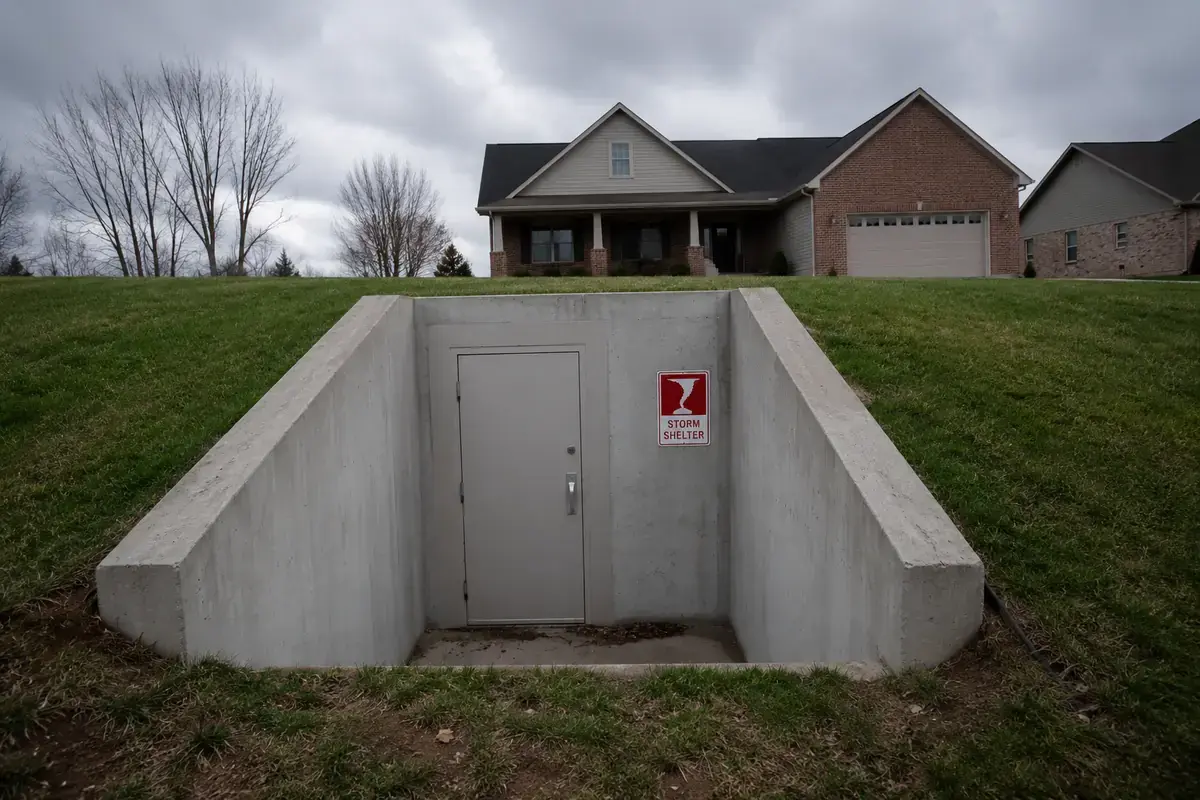
A concrete storm cellar is the most solid protection most Oklahoma homes can get: mass, fire resistance, and proven tornado performance. Precast reinforced units are set in place or shelters are poured on site, above or below grade.
Built for Tornado Alley
Why Concrete Storm Shelters Work for Oklahoma Homes
Concrete has been the backbone of serious storm protection for decades, and for good reason. A reinforced concrete shelter is heavy, rigid, and resistant to the windborne debris that does the real damage in a tornado. That sheer mass is reassuring to a lot of Oklahoma homeowners who want the most solid structure they can put on their property.
Concrete shelters come in two main forms. Precast units are cast at a plant, cured under controlled conditions, then trucked in and set in a day, which keeps quality consistent and the install fast. Poured-in-place shelters are formed and cast on site, which allows custom dimensions and integration into new construction or a garage. A licensed installer can walk you through which approach fits your lot and budget.
If you grew up here you probably call the below-grade version a concrete storm cellar, and that is the same thing a supplier will quote as a precast or poured concrete shelter. The word makes no difference to the rebate either: the Oklahoma Department of Emergency Management defines a SoonerSafe safe room as any above or below ground residential shelter meeting FEMA P-320, FEMA 361, and ICC-500. What matters is the rating and the paperwork, not the name it goes by locally. Compare it against the other types on our guide to storm shelters and storm cellars in Oklahoma.
Concrete also stands up to Oklahoma's full range of weather, not just tornadoes. It will not rust, it resists fire, and a properly sealed below-grade concrete vault handles groundwater well. The trade-off is weight: setting a precast unit or pouring on site takes equipment and a properly prepared base, which is exactly why this is work for a licensed crew, not a weekend project.
What You're Getting
Inside a Concrete Storm Shelter
A concrete storm shelter is a steel-reinforced enclosure, either precast and delivered or formed and poured on site, with a code-rated steel door. A typical unit includes:
- Construction
- Steel-reinforced concrete, precast or poured in place
- Typical capacity
- 4 to 12 people depending on dimensions
- Placement
- Above grade, in-ground, or under a garage slab
- Door
- Code-rated steel door engineered to the same standard as the walls
- Wind rating
- Engineered to FEMA P-320 / ICC-500 (250 mph design wind speed)
- Durability
- Will not rust, resists fire, handles groundwater when sealed
- Ventilation
- Code-sized air vents for a sealed but breathable space
Buyer tip: With concrete the door and its frame are the critical detail. Confirm the door assembly is tested to FEMA P-320 or ICC-500, because the walls are only as protective as the opening in them.
Step by Step
The Installation Process
Installation depends on whether the unit is precast or poured. Precast is faster; poured allows custom work. A typical precast install runs like this:
- 1
Free consultation
An installer reviews your site, your size needs, and whether precast or poured suits the location, then provides a written quote.
- 2
Site and base prep
For below-grade units the pit is excavated after an 811 utility locate; for above-grade a reinforced base or slab is prepared.
- 3
Delivery or forming
A precast unit is trucked in, or for a poured shelter the forms and reinforcing steel are set on site.
- 4
Set or pour
The precast vault is craned into position and leveled, or the concrete is poured into the forms and allowed to cure.
- 5
Backfill or finish
Below-grade units are backfilled and graded for drainage; above-grade units are anchored and sealed.
- 6
Door fit and walkthrough
The steel door is fitted and checked for a proper seal, and the installer hands over the certification paperwork.
2026 Pricing
Concrete Storm Shelters Cost in Oklahoma (2026)
Concrete shelters span a wide price range because they cover everything from a small precast vault to a custom poured room. Weight, placement, and access drive the cost.
| Option | Typical Installed Price |
|---|---|
| Small precast concrete Compact unit, straightforward set | $4,500 to $6,500 |
| Standard precast (in-ground) Family size, excavation and backfill | $5,500 to $8,500 |
| Poured / custom concrete Custom dimensions or new construction integration | $7,000 to $12,000+ |
Prices are typical installed ranges, which is what you pay the installer. Your quote depends on size, site conditions, and materials.
SoonerSafe Rebate
Concrete units that meet FEMA P-320 are generally eligible for the SoonerSafe Safe Room Rebate Program. It may be offered as a partial reimbursement toward a heavier-built shelter, paid after the work is done and only if you are selected.
Rebate amounts, eligibility rules, and registration dates are set by the Oklahoma Department of Emergency Management and change from year to year. The figures on this page were read at the agency's own pages on September 16, 2026. Check the program's own page for what is current before you plan around any of it. See soonersafe.ok.gov, the Oklahoma Department of Emergency Management program page.
Storm Shelter Cost in Oklahoma
Already own one? How long a storm shelter installation takes
Statewide Coverage
Storm Shelter Installation Across Oklahoma
Storm shelter installation covers the OKC metro, the Tulsa metro, and the surrounding cities. Pick your city below.
Common Questions
Concrete Storm Shelters: Questions Oklahoma Homeowners Ask
Is concrete better than steel for a storm shelter?
Neither is universally better. Both can meet FEMA P-320 and ICC-500 when built and tested correctly. Concrete offers mass, fire resistance, and no rust; steel is lighter and faster to install. The right choice depends on your site, placement, and budget, which a licensed installer can help you weigh.
Can a concrete shelter go above ground?
Yes. Precast above-ground concrete units anchor to a slab and provide the same rated protection as in-ground models. They are heavier than steel above-ground units, so placement may require equipment.
How long does poured concrete need to cure?
Concrete continues to gain strength over time, and an installer will not put a poured shelter into service until it has cured enough to meet its design strength. This adds time to a poured install compared with a precast unit that arrives ready to set.
Will a below-grade concrete shelter stay dry?
A properly sealed unit with correct grading and, where needed, a drain or sump should stay dry. Concrete handles groundwater well when the seams are sealed and water is directed away from the door.
Does concrete crack over time?
Steel reinforcement controls cracking, and a quality precast or poured shelter is engineered for the loads it will see. Ask the installer about the reinforcement and the warranty on the unit you are considering.
Compare Your Options
Related Storm Shelter Types
What happens after you send it
- How fast will someone get back to me?
- Your request goes to a licensed local storm shelter installer, usually within about an hour during the day. That installer then contacts you to look at the site and price the work on their own schedule.
Ready to Price Concrete Storm Shelters for Your Home?
Free written quote, no obligation. Serving homeowners across Oklahoma.
Your request goes straight to an independent local storm shelter installer serving Oklahoma, usually within about an hour during the day, not a national lead list.
Updated